Rushmore Review

Rushmore (1998) - CeDe.com

Going through which movie I wanted to watch, I looked at some old favorites from before I started reviewing, and that’s where I cam upon Rushmore. Rushmore is one of Anderson’s first films, but, personally, I think it actually tops Grand Budapest Hotel as my favorite. Unlike Grand Budapest Hotel, the stylistic side of Wes Anderson is quite subtle, which I really liked. Having it toned down allows the world to feel very real, making Wes Anderson’s odd comedy hit harder. As is with most of his films, the comedy is driven by the characters, this is certainly true here. That is the reason lines like “I saved Latin” work so incredibly well here, because of the characters that have been established, allowing the circumstance to mean something.

I saved Latin (Rushmore) Teaching Spanish, Books To Read, Content, In This Moment, Entertaining, Reading, Celebrities, Funny, Movie Posters

This character work wouldn’t… well… work without the excellent performances of Jason Schwartzman and Bill Murray. The characters don’t yet have the dryness in most of Anderson’s work, but they have more life to them. Both ways work, but I personally prefer the subtleties of Rushmore. The general idea of this being in high school, and opening up to who you really are, is an excellent theme for the movie. But, I will say, certain parts where Max tries to get close to the teacher can be uncomfortable. This element of uncomfortable is likely due to my problems with the middle of the film. Normally, this is the part in the film where things become extremely heightened, but, here, it feels like the exact opposite. The middle felt slow, it was only the beginning and the end that admittedly had me entertained.

Rushmore - Trailer - (1998) - HQ - YouTube

Overall, Rushmore is probably one of Wes Anderson’s best movies. And, I’d even say it’s probably the best coming of age story from the 90s, but, it is dragged down by the slow pacing in the middle. 8.9/10
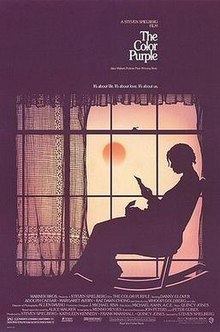
The Color Purple Review

Steven Spielberg’s The Color Purple 1985

On a surface level The Color Purple is a very emotion-driven story that is all about becoming free. However, I found that, although it had those elements were there, it wasn’t for the right reasons. I’ll start with the good, because it is there. One thing The Color Purple does well is something Spielberg hasn’t done in any other films, and that’s using long and wide shots. While, I should say that this doesn’t make sense for his usual blockbuster, it was refreshing to see him try something new with his shots. Along with that, the colors in this film are perfect. It’s incredible that it’s as easy as it is to realize that a film takes place in the early 1900s South simply based on its color, The Color Purple is no exception. Overall, the performances are absolutely outstanding, namely, Whoopi Goldberg. Her performance is amazing, and it’s backed up by the likes of Oprah and Danny Glover. The way they handle the idea of abuse shows very well, and it does through everything the film does. Abuse is a very real and interesting topic to cover through film, but that being said, the movie takes it just a little too far. Even within the first 30 minutes, it felt like they were beating the dead horse, they’d shown the audience enough. It seemed to die down after that, but it still felt like it was trying too hard to convey the message at certain moments. But, for the most part, that hardly bothered me. I was bothered by a more sensitive topic. So, I will give a warning to say that I have not experienced what it is like to be a person of color, and that I am simply speaking from the experiences I have had, and the history I have learned. That being said, the movie doesn’t handle racism well. For a film based in the South in the early 1900s, it seems that racism is almost non-existent. There are brief moments that they touched on the idea, but truly, I only counted three. That isn’t to say that all films featuring people of color need to take on the ideas of racism, but, when a film is placed in a setting as prominent as this, it’s almost insulting not to. The way that it treated black life at the time as a happy kind of a thing seemed to gloss over the serious things that were happening at the time. This had a somewhat ripple effect for my view of the film. I wanted to like it, because this overall idea is intriguing, but I just couldn’t shake the idea that something was wrong with it. And I believe that there is one easy solution, it shouldn’t have been Spielberg. There is a phrase for writing that you should write from what you know, and I think it’s safe to say that directing isn’t all that different. Bringing in a black director would have likely made it so the story was more believable, and more importantly, made it so black voices were heard. Especially at the time, directors that weren’t white men were virtually unheard of, even now, that still somewhat holds true. That needs to change. Film is all about expression, and more voices are waiting to be heard. So, overall, the movie is fine, but it glossed over an incredibly important aspect of the time period, which made it hard to watch. 7.8/10

Team Thor

After a long hiatus from short films, Waititi came back with a punch in 2016 with the release of Team Thor. Put simply, it’s What We Do in the Shadows placed in the MCU. Not only is it a mockumentary, but it also uses clever ways to poke fun at the MCU. I believe this to be the start of Taika’s renovation of the Thor character, introducing a light hearted version of the character by putting him on break during a scenario that allows him to directly comment on the rest of the universe. It addresses great plot holes in doing so, such as, why wasn’t Thor invited to Civil War? It just gives the Thor character a break between these incredibly dark events. Jeff Goldblum also returns as the Grand master, and is great as always. It introduces new characters such as Daryll to make it so this new take on the universe seems lived in, which is nice. But, overall, this takes the MCU as an entirety and puts the Waititi comedy touch on it in a very good way. 8.2/10 And, that’s a wrap on every Taika Waititi short.

Slade in Full

At first, I was thinking this was yet another funny parody. And, although it’s still a parody, it doesn’t succeed as a comedy. It very well could have if it weren’t for the pacing. It starts off well, but then falls into this slow unnecessary scene that adds nothing to the story, and is just uncomfortable. At first, I was curious. It doesn’t feel like something Waititi would do, but at the end I did see that he didn’t direct it, which makes sense. It definitely isn’t as funny as other Waititi things. And honestly, it feels cheap. Even with other 48 hour film festival things, they didn’t feel this cheap and messy. Still, the moments where the camera tries to make up for the fact that Waititi is the only actor in this large war scene admittedly made me chuckle. Honestly though, just skip this one. 4.5/10

Arab Samurai

Arab Samurai is another Taika Waititi 48 Hour film fest submission. It’s one of his best parodies yet. It turns Waititi into the stereotypical ninja character from made for tv shows from the 80s. Not only does Taika give a wonderfully over the top performance, but the voice over is perfect. Even though Waititi obviously can’t do all of the ninja moves, everything done in the film makes it so it’s believable as a show from that time. The camera work is also surprisingly successful in this regard. It cuts just in time to make things believable. And, again, when I say “believable” I mean as an actual show from the 80s, not a real ninja movie. Obviously, it isn’t perfect, but as a 48 hour film, it’s quite decent. Be warned, though. This movie contains Taika. 7.8/10

One Dream Rush

To be fair, Taika Waititi had a very limited involvement in this 42 minute slug fest. This short gives “artistic films that make no sense” a new meaning. It was so strange that the David Lynch section made more sense than the majority of the film. And that’s just not okay. There comes a point between artistic with a meaning that just takes some digging and throwing random images onto the screen and calling it art. Not only is it weird and slow, it’s also incredibly uncomfortable to watch. There were honestly a few sections that I skipped through, and I don’t regret it. Now, it isn’t all bad. There are genuinely a few directors who made intriguing shorts. Maybe it’s my bias, but Taika Waititi’s short was my personal favorite. It wasn’t his typical comedy, but it did include his early style, which is unique. And that’s what I learned from this movie. Making a film that’s uncomfortable and weird can be good, but when it’s the same as every other short film, it doesn’t work. Sadly, those moments make up the majority of this “short.” 3.5/10

A Perfect Love Review

Another 48-hour film festival submission, A Perfect Love is another Waititi short film that is funny, and surprisingly relevant. One thing that I love about this short is a thing that I find amazing about all of Waititi’s movies, and that’s finding comedy in the mundane moments of life. The beginning of the film shows Taika’s character, frustrated, breaking rules that don’t actually matter. For the first minute, he more or less goes to war with leaves. But, then we learn why, he’s lonely. He’s looking for love, and finds it when he looks in his mirror at himself. The next four minutes have Taika go on a date with himself, and this allows some great comedic moments. Obviously, being in quarantine, I think many of us aren’t far off from having conversations with ourselves in a mirror, but, that just adds to the humor of this short. I do, however, feel that there were a few missed opportunities to make the script just a bit better. For example, I would have liked some foreshadowing of the mirror before it’s reveal, almost halfway through. I also wish that the film didn’t use a handheld camera. While there is value in the shakiness of the camera, A Perfect Love doesn’t use it in context, which is where it makes sense. So, overall, I did enjoy A Perfect Love, but, I feel there wasn’t quite enough there. 6.8/10

What We Do In the Shadows Short Film Review

As a huge fan of the movie and tv show, I was excited to see where the idea of What We Do In the Shadows started. Although I didn’t find it quite as entertaining as the other two, it still has its merits, making it a funny short. As I said, I was looking forward to understanding the roots of the idea for the franchise. Not only did I see all of the early stages of the ideas and jokes that were the same, but one thing that interested me is that there were some shots that were nearly identical to the original. Down to the location and placement of the characters, everything seemed to fit. As always, they use the mockumentary style to their advantage in a very clever way. All of the characters are unique, and have clear distinctions from the others, except for Waititi’s character. Although I love Taika, I have to say, I didn’t care much for his character in this short. Part of this is the voice, I’m not sure if it was hard to talk with the prosthetic teeth, or if he just didn’t find the right voice, but that character didn’t work for me in this version. But, there is still good comedy and decent shots. At least enough to be worth a watch to the hard core What We Do In the Shadows fans. 7.6/10

Tama Tu Review

The next Waititi short is Tama Tu, a 17 minute long look at the Maori soldiers in hiding during war. Rather than focusing on the violent action side of war, or the sad consequences of it, Tama Tu finds a small quiet moment. In this moment, it presents humor and emotion in a moderate way, similar to Jojo Rabbit. It does this through a brilliant use of lack of dialogue. This doesn’t mean that there aren’t any conversations, as the characters interact through facial expressions. This allows for some funny moments. Even without dialogue, the characters are clear and distinct. It also plays out, more or less, in real time. Using long wide tracking shots that give the impression that this is a real event. But, at it’s heart, Tama Tu pays a great homage to all of the indigenous people who died in war, and it shows the humanity of everything happening. While it is still relatively low quality production, the look is clearly on a higher budget that Two Cars, One Night. In general, I actually like this one slightly more than Two Cars. Both have their merits, but I feel that Tama Tu plays into that balance Waititi presents in his feature films quite well. 8.2/10

https://www.nzonscreen.com/title/tama-tu-2004/overview

Heinous Crime Review

The next Taika Waititi short film is his first entry of the New Zealand 48 hour short film festival. In an interview I earlier saw with Taika, he mentioned that Monty Python was a huge inspiration for him growing up, and that is extremely prominent here. However, it’s also clear that this was made in 48 hours. While there are funny moments, it mostly fell flat due to it’s over the top nature. But, it should also be noted that Waititi does a great job to make these characters feel unique. Making an entire court case about a judge losing his hammer is a great premise. If Waititi never went into film, it’s safe to say that he would have a sketch comedy show with things like this, and I wouldn’t complain. 6.7/10

Design a site like this with WordPress.com
Get started