I’m Thinking of Ending Things Review

Although I’m incredibly late, Charlie Kaufman’s “I’m Thinking of Ending Things” has quickly jumped into the place of my favorite movie to come out of 2020. Ironically, it has themes that we all dealt with last year, namely loneliness, isolation, and confusion. While that interpretation of the story isn’t ever outright given to us, it doesn’t take too much digging to understand it. The movie’s an incredibly weird psychological thriller, and while many bashed the movie at release for being devoid of meaning, the meaning of the story relies on the deeper, albeit weird, language of the story, especially in its final act. I’ll also mention the look of the film. Although things start of very mundane, the look of the film progressively becomes more abstract. The performances also add to this, especially in Jake’s parents. What starts out as an awkward meeting with some old parents gaining dementia becomes something more sinister. I don’t really want to say too much without spoiling the entire movie, and to be honest, what I’ve said has may be too much. Nevertheless, ‘I’m Thinking of Ending Things’ uses these weird elements to further the meaning of the story. While, at times, these weird elements are just to show something like “The characters on drugs now,” ‘I’m Thinking of Ending Things’ uses it to show us more about each character. Now, this is where I’ll start getting into more explicit spoilers, so skip to the end if you want to avoid any spoilers.

Similar to another movie from 2020 that I enjoyed, Tenet, the main character isn’t actually the main character at all, revealed later in the final act. This is subtly hinted to through the constant change of Jessie Buckley’s character’s name (literally credited as Young Woman.) Also with all of her characters also constantly-changing interests being based solely in the interests Jake’s parents reveal to be his own interests from his childhood. The idea of revisiting your childhood is also explored through smaller parts of the story such as the fear of what lies in the basement. So, although ‘Young Woman’ may not be a real person at all, she is learning about Jake’s past, almost as if it’s his subconscious trying to remind him of what’s real. The movie deals with the idea of only really living your life in your head. And for the protagonist of the story, this line between the fantasy in his head and his real life blurs. While we see various time-line versions of Jake’s parents, we also see multiple versions of Jake. While never explicitly stated, knowing what I was getting into, I was fairly certain the Janitor was Jake from early on. Janitor Jake is looking back on his past, which is why we see all of the jumbled timelines, and he’s thinking of how he wishes it went. We see this through the end of the film when Jake, in old person makeup, accepts his Nobel Peace Prize (never truly explained why, with reason), and begins to sing a song from Oklahoma. All of this being said, the movie isn’t perfect, and don’t get me wrong, as you can tell, the movie is mind bending and genius. My biggest issue is just how much of the time is spent with the parents, as I never found that to be a terribly necessary part of the story. I understand how it’s intended to introduce the larger aspect of time’s role in the story, but, at least for me, the point was made clear fairly quickly. While I’m definitely in support of using a slow pace in the movie, I’d still wish if they’d moved out of the house slightly faster. Another major complaint others had, that I definitely understand, is the long philosophical discussions between Jake and Young Woman. I think the scenes could have been shortened, but I also think that the length of them was fully intentional. Each part of those conversations is Jake having a conversation with himself, looking upon it from a third person perspective.

Overall, while there were scenes that dragged on too long with the dialogue, the movie was insanely genius from my interpretation. While it’s probably my favorite of the year, it’s also easily the most underrated. Many didn’t like the movie, and while I can understand that, almost every piece of this movie seemed to fit for me. I’d love to see the achievement of the film’s structure be recognized later on, and a best adapted screenplay nomination at the Oscars would be enough for ‘I’m Thinking of Ending Things’ to hopefully get the respect it deserves. All in all, I loved it, so I’m giving it a solid 8.5/10
Lost in Paris Review

Ever wondered what a French Canadian Wes Anderson physical comedy movie would look like? Look no further than Lost in Paris. The film has a lot of elements that I think are absolutely brilliant. Most all gags are brilliant, and often payed homages to classic physical comedy greats, such as Buster Keaton and Charlie Chaplin. Although I’m not all that much into silent films, the impact was clearly present throughout, as the physical comedy was honestly what made the film work. Don’t get me wrong, though, the characters are utilized well. A good portion of the physical gags related to the story in some way. And although I found the occasional unnecessary gag out of place, the way everything fit together just worked for me. I don’t know if this movie is necessarily for everyone, but it’s unique use of physical comedy, translated through a modern lens, offering something altogether new, and worth watching. I will note that it is in French for a large portion, but I wouldn’t make that drive you away. While you might miss some things, I honestly found that there were moments where I didn’t even need to look at the subtitles to understand what was happening. This was clearly fully intentional. Even though the film is made by a French duo, the movie starts out with everyone speaking English in a comically cold Canada. When the main character goes to France to see her Grandma, who has ran away from the senior home, the language barrier becomes more apparent. But, given that the main character also faces this language barrier, it’s relatable enough for an English speaking audience to grasp, even if one isn’t a fan of subtitles. My biggest complaint would probably just be the length/pace. Although it’s only about an hour and a half, it’s more or less one physical gag after another. And although the timing of everything is practically perfect, I would have enjoyed a few more breaks in the structure. So, overall, my personal ranking is very high, but the pacing knocks it down a few points, I’ll give it a solid 8/10.

The Royal Tenembaums

Finishing off right at the tail end of my winter break, I watched Royal Tenembaums. When I first watched this one, I wan’t a fan of it. And although it still doesn’t reach the top-tier Wes Anderson movies for me at this time, I appreciate it a lot more now. As I mentioned in my previous review of Bottle Rocket, Wes Anderson has a distinct use of fantasy elements in most all of his stories. And although Bottle Rocket didn’t have any of that element, The Royal Tenembaums seemed to perfectly integrate that in an extremely grounded way. In a lot of ways, this is done through the use of the darkest themes in any Wes Anderson film. And sure, subtly, other Wes Anderson movies deal with some similarly dark subject matter, however Royal Tenembaums doesn’t hide it, rather, goes head first into dealing with the concept, which is something I greatly appreciated. The cast of characters were also a very strong aspect to this one. Anderson’s use of ensemble is easily at its best in Royal Tenembaums. Every character clearly has their own motives, purpose, and scars. Scars, both metaphorical and literal, are used as a heavy motif throughout. The biggest complaint I have with Royal Tenembaums, and I think is the thing that, at first, made me not like this movie all that much, is the slow pacing. Although I wouldn’t call Anderson’s movies fast paced, his style works best with a sense of ugency. Even though its slightly shorter than his longest film, Life Aquatic, it feels like it drags on just a tad too long. I don’t necessarily have an issue with slower movies, but when its meant to be a comedy, issues arise. Most jokes didn’t land for me, which isn’t out of the ordinary, but being that it was slower paced, there were scenes that I just wanted to finish sooner. So, although I thoroughly enjoyed quite a few aspects to Royal Tenembaums, the issues that I disliked my first watch around were still prominent, 7.5/10.

Bottle Rocket

As Wes Anderson’s first film, ‘Bottle Rocket’ isn’t bad by any means, however, in comparison to the broader stroke of his work, it falls flat in a few areas. First of all, I’ll mention my largest problem with the film, and that’s how low the stakes are. Most of Anderson’s other movies have an almost fantastical element; Life Aquatic has the shark, Rushmore has the over the top plays, Moonrise Kingdom has the storm of epic proportions, etc. However, Bottle Rocket doesn’t have an element that comes even close to that level of excitement. Sure, the characters are all individually interesting, but when the plot doesn’t give us a reason to care about the outcome of the event, the movie begins to drag. Being that it was only an hour and a half, I was honestly surprised at how much the movie seemed to drag. Don’t get me wrong, there were certainly exciting scenes that moved at a fast pace, but pacing isn’t my problem. Partially, this lack of movement is likely due to the small budget the movie had, 7 million USD. Aside from that, the movie’s also quite forgettable. It has admittedly been a while since I watched it, but I barely remembered most of it, which I would also likely source back to the low stakes. On the more positive side, however, the film does do a lot of unique things, which I think is what sets it apart from other generic heist movies. One of the first things is the language barrier between Luke Wilson’s character and the hotel maid, this brought a different cultural aspect from any other Wes Anderson movie. The action scenes are also perfectly fit for Anderson’s style, which isn’t fully realized at this point. All in all, this is certainly one of the weaker Anderson films, but there are sparks of joy in this movie that make it enjoyable, 6/10.

The Darjeeling Limited

The Darjeeling Limited is likely the most forgettable of all the Wes Anderson films. However, simply by that virtue doesn’t mean it’s bad. The Darjeeling Limited takes the interesting method of mixing Indian culture with the visual French-esque style of Wes Anderson. Of course, being that he writes his own script, this contrast is often used to the films advantage. Using symmetrical shots fits perfect in the setting of a train, and is used later in his filmography. Honestly, Darjeeling Limited is where Wes Anderson solidifies his unique style, and not just visually. As mentioned, the movie is very forgettable, which I blame on the script. Although not bad, the film repeats the exact same beats at least 4 times throughout the 1.5 hour run time. Even after watching it for the second time, I’ve forgotten a lot of the movie, making this review hard to write. I’d also mention that the film works better if you watch the short film prequel first, as Jason Schwartzman’s character seems very underdeveloped otherwise. And that’s the big problem, even though it dragged on, the film just needed more. Specifically, more that’s different. Compared to other Wes Anderson movies, the distinct nature between the characters is stronger, but it is never actually used to the plot’s advantage. And that’s kind of where I’m left with what I can remember from this. I wrote something in my notes about the train being symbolic of how people are moving forward constantly, but I just can’t remember most of this movie. Which is why, sadly, I give Darjeeling Limited a 6.5/10 (again).

The Life Aquatic With Steve Zissou

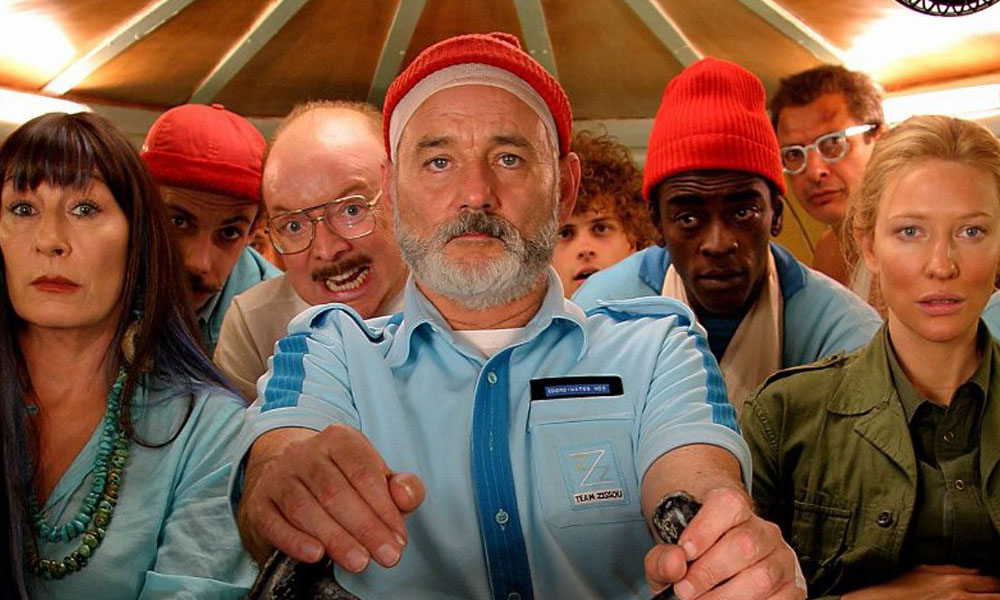
Realizing I have somehow managed to miss reviewing nearly half of Wes Anderson’s movies, I figured it was a good time to revisit them and review the one’s I have yet to. And the first one on that list is “Life Aquatic.” I have a very strange relationship with this movie, because there’s so much of it that I love. But at the same time, there are quite a few scenes that simply don’t work for me. The first thing I’d like to mention, being something that works for me in nearly every Anderson movie, is the unique use of dialogue. Life Aquatic’s dialogue, like most of his other work, is very dry, allowing room for humour. This is mostly done well between Steve and his son, Ned. But for the most part, that’s where the humour lies, on a somewhat weak chemistry between a father and his long-lost son. It’s clear that more humour was intended to land through the use of an ensemble. In other films such as Moonrise Kingdom, the ensemble is used to its full potential. This is clearly evident in moments such as the phone operator’s unique interest of food and the use of this to build the world around these characters. However, Life Aquatic doesn’t achieve this to the same scale. Sure, each member of Zissou’s crew is uniquely distinct, but the characters never actually do anything for the sake of the story. This, consequentially, caused the general story of the movie to not move the way it was intended. Ned’s love for Jane is often just a boring plot that I honestly didn’t care about. The only truly interesting plot beat was Steve’s relation to his mentor, driving him on a revenge plot for a shark. Which brings me to the action of this movie. I’m honestly surprised Anderson doesn’t do more action movies to this scale, as though I may feel Luke-Warm on most of the shots in Life Aquatic, the action was always perfectly shot, and allowed for a wonderfully fast pace. This was also accompanied by the music which is… perfect. It fits perfectly as the homage to classic made for tv science shows, along with being scientifically proven to make me type three times faster. Overall, this isn’t the best Wes Anderson movie by any means, but it’s definitely a fun watch with enough moments to be worth watching, 7/10

Fargo

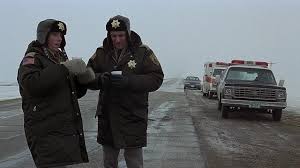
For me, Fargo hits all the beats it needs to hit. It’s got a fine balance of comedy and drama, it has some amazing characters, balanced well with the cinematography, heck, it was even shot in my home state. But, at the same time, it doesn’t stick with me the way I feel it should.

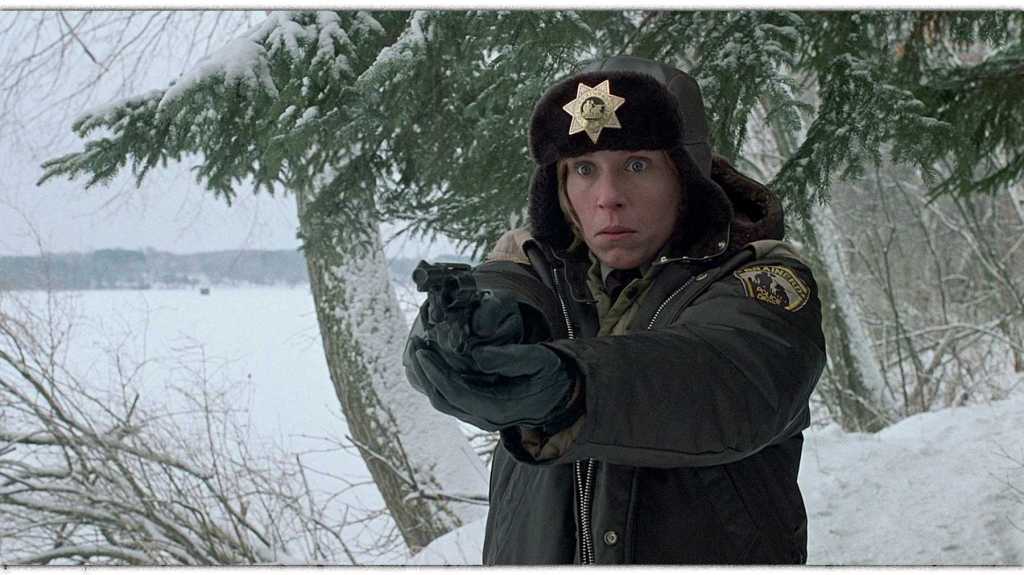
I’ll start off with what I liked. For one, the cinematography was outstanding, the use of the white background was used extremely well to highlight or disguise certain elements of the story. This is used best in the gory scenes, as the red truly pops out in the environment, even from long distance wide shots (which are often used). Of course, the visuals of a film can’t completely save it, this is backed up by the excellent characters. Each character is unique, and although the plot seems to shift between around 3 main story lines, it does this with ease. The narrative focus is very strong, and it doesn’t seem to drift from what needs to be told, however, that doesn’t mean the movie goes without its faults.

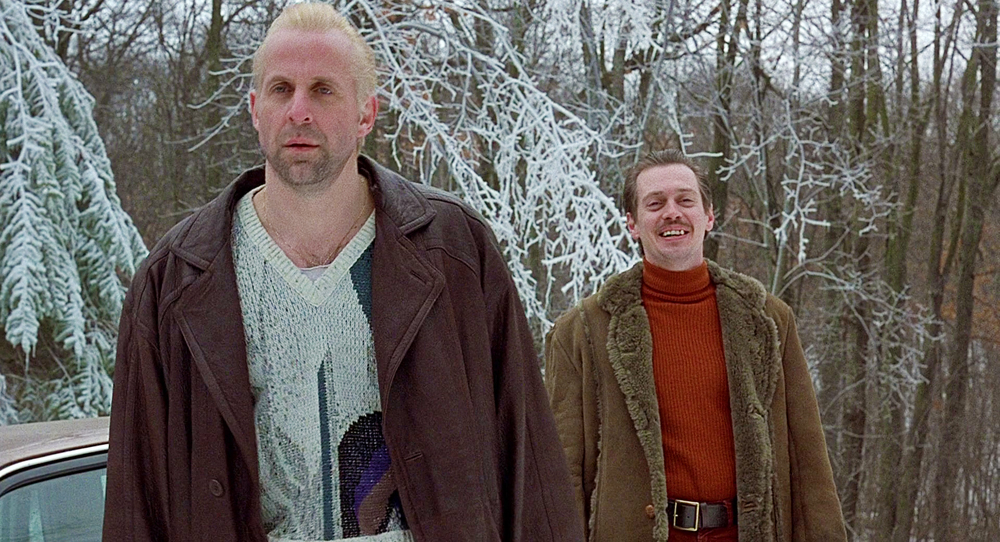
My biggest complaint with the movie comes down to a mix between issues with the pacing and quite a few cliche elements. As mentioned, I very much appreciated the balance of comedy and dramatic moments the film has. However, it’s the transition between the two that causes my issue. The movie handles each aspect incredibly well, and I almost feel it would actually better off if it didn’t try to merge the two. As the comedy often takes the form of character comedy, it’s a very difficult issue of mine to put to words, but put simply, the actions of the characters become inconsistent with this shift in tone. Although I loved the character, Steve Buscemi had very inconsistent moments. I understand that the rising tensions of the film often causes characters to act differently, but especially with him, although I understood the character themselves, their actions were never as clear as they should be. This leads me to my next point, which is the sometimes cliche use of violence. I didn’t have an issue with the gore the Coen Brothers included (wood chipper), but I thought that many of the action scenes themselves were bland. Usually, it was the aftermath of the action scenes that truly had me excited.

Overall, I know I just dumped on that movie a bit, but the truth is, I had a good time with Fargo. It has its issues with pacing, but overall, it handles a lot of things very well, only missing a step in a few others. 8.9/10

Tenet

m.media-amazon.com/images/M/MV5BOGJmZjcxNTAtYjV...

To be fair, this is my second watch, I wanted to wait to review this until after I saw the movie a second time. Now that I’ve done that, I will say that I’m glad I made this choice. The first time watching the movie, I became far too engrossed in the visuals and special effects (which are fantastic) to truly understand and more or less appreciate the brilliant telling of the spoiler. Also, this probably contains spoilers, but I don’t know, as I’m writing this forward, I haven’t written the rest yet. Unless I’m writing this while inverted…

Christopher Nolan's 'Tenet' Hopes to Kick Off Moviegoing Again - Variety

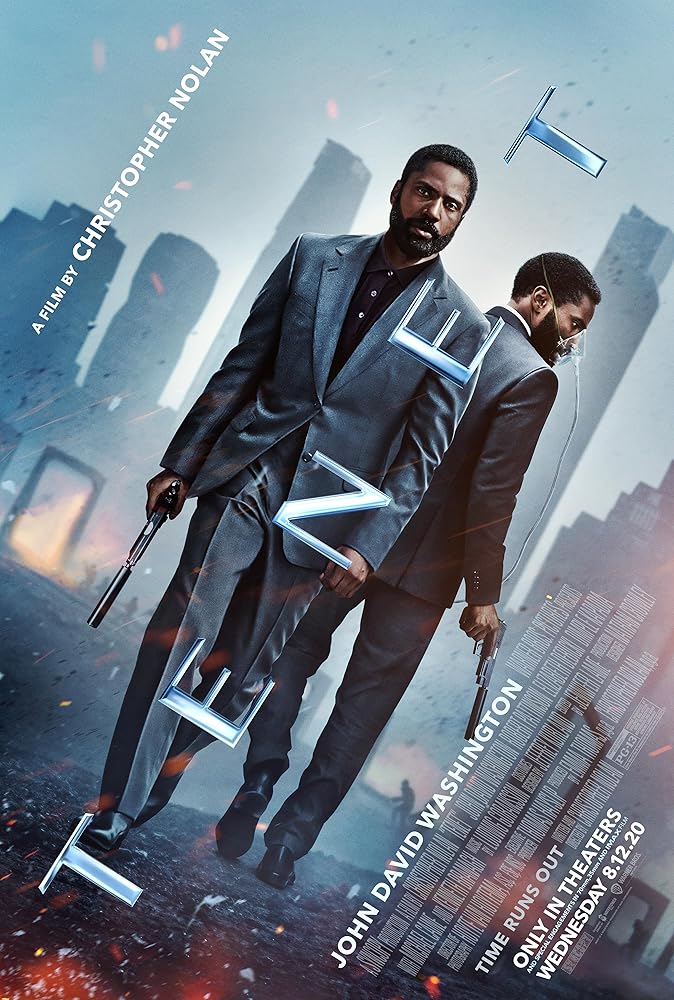
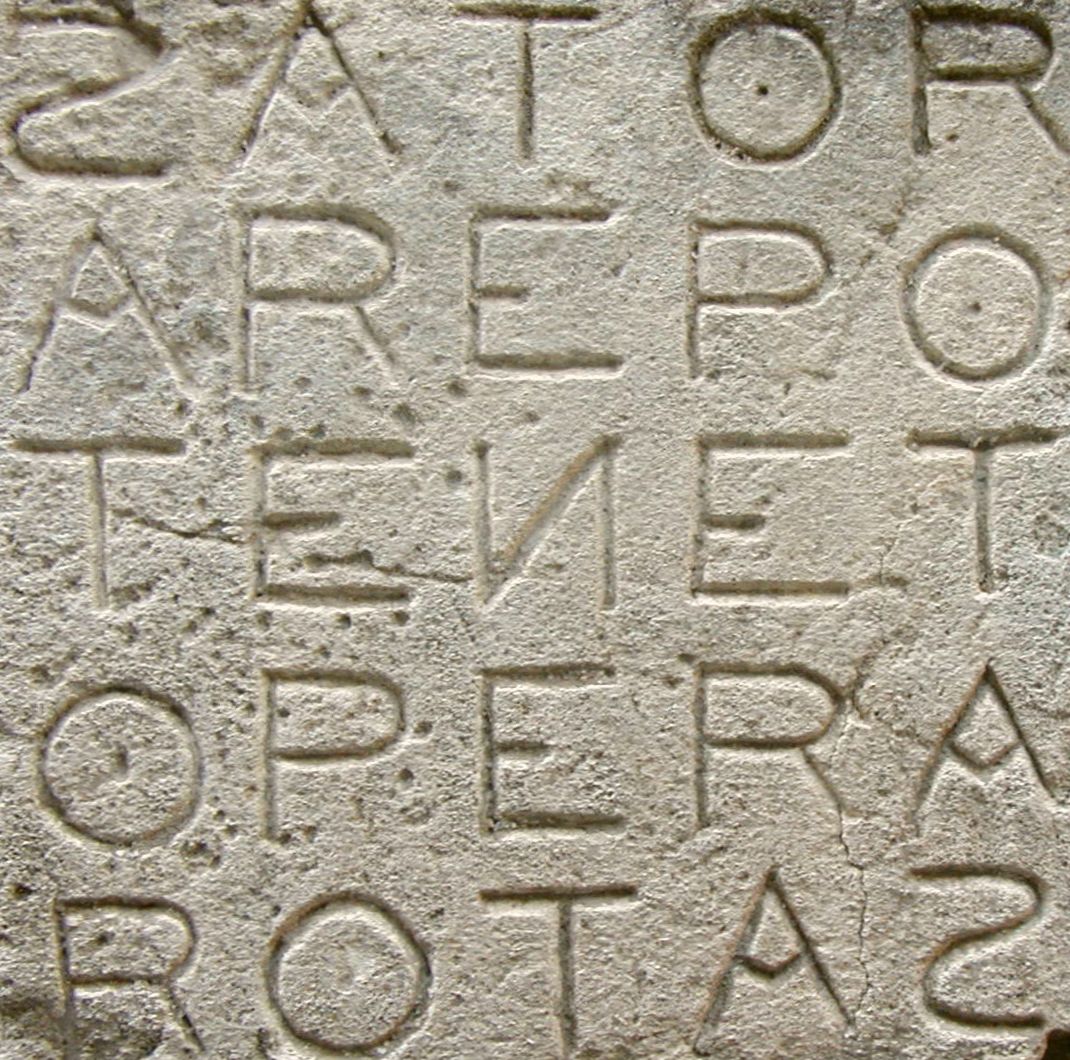
It goes without saying that a lot was riding on Tenet’s shoulders for the movie industry as a whole. While the movie worked for me in a lot of ways that I’ll get into later, I don’t know how accessible it was to other movie goers. For a movie that was supposed to bring people back to the theaters (at least after it was filmed), I don’t know if it 100% succeeded at that. But, in most other ways, this movie works, at least for me. The movie is confusing, and some often dismiss this fact as an accident. Looking further, it’s quite obvious that Nolan’s entire intention was to make it the puzzle it is. In fact, looking back on the origins of the movie, the word TENET is based off of the SATOR square, an ancient Latin puzzle, which also provides information on the plot within that.

Sator Square - Wikipedia

The square itself is composed of four words, SATOR, AREPO, TENET, OPERA, and ROTAS. More importantly, however, is the fact that the square is a palindrome. No matter how it is read up, down, left right, it reads the same. Each of the words in question also relate to the plot. Sator, obviously, is the main villain. Arepo is the name of the head of the freeport art instillation (took me a while to find that one.) Tenet is… well… the title. Opera relates to the first scene which is also crucial to understanding the relationship between the protagonist and Sator. Finally, Rotas, in Latin, means to turn. Likely, this is in reference to the red room blue room scene, where inversion is done via a turning corridor. The fact that this is a palindrome also is a reference to the fact that the plot can be interpreted differently when viewed backwards. For example, Neil’s introduction, chronologically, is completely different from that of the protagonist. Speaking of Neil, I greatly appreciated the fact that, although his character was actually the one who is the stereotypical protagonist in terms of the actions done to move the plot forwards, and in the implied tasks that happen off screen, John David Washington’s character, who is more of a recruiter, is who we follow for this story.

Tenet trailer offers more clues to new Christopher Nolan mind-bending movie  - CNET

Point is, the movie is confusing and stressful, and that isn’t for everyone. When it comes to a final score, this movie is difficult. There’s a lot I love. The visuals are perfect, along with the music. The acting is good enough to carry the movie forwards (usually), and I enjoyed picking apart the plot. But, on the other hand, it is confusing, the villain is very generic, and I didn’t feel that there was enough time to learn about the characters. I probably could have talked about each of those points in greater detail, but this paragraph truly sums up my thoughts. Overall, while I thoroughly enjoy this movie, I can’t help myself but give it a 7.5/10

Hook Review

Hook (film) - Wikipedia

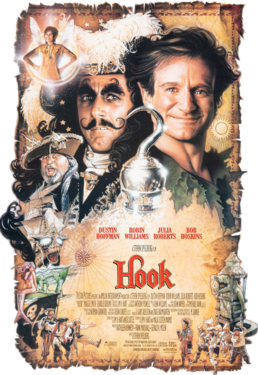
Steven Spielberg has publicly mentioned that Hook is his least favorite out of his filmography, and it’s not hard to see why. Although I don’t think it’s his worst, it’s one of the most forgettable and bland Spielberg films, with some great moments, and others that are better left forgotten. While this should have been a fresh take on the Peter Pan story, it turned in to a movie lacking anything that truly made me care about it.

Steven Spielberg's Hook: What Went Wrong? | Den of Geek

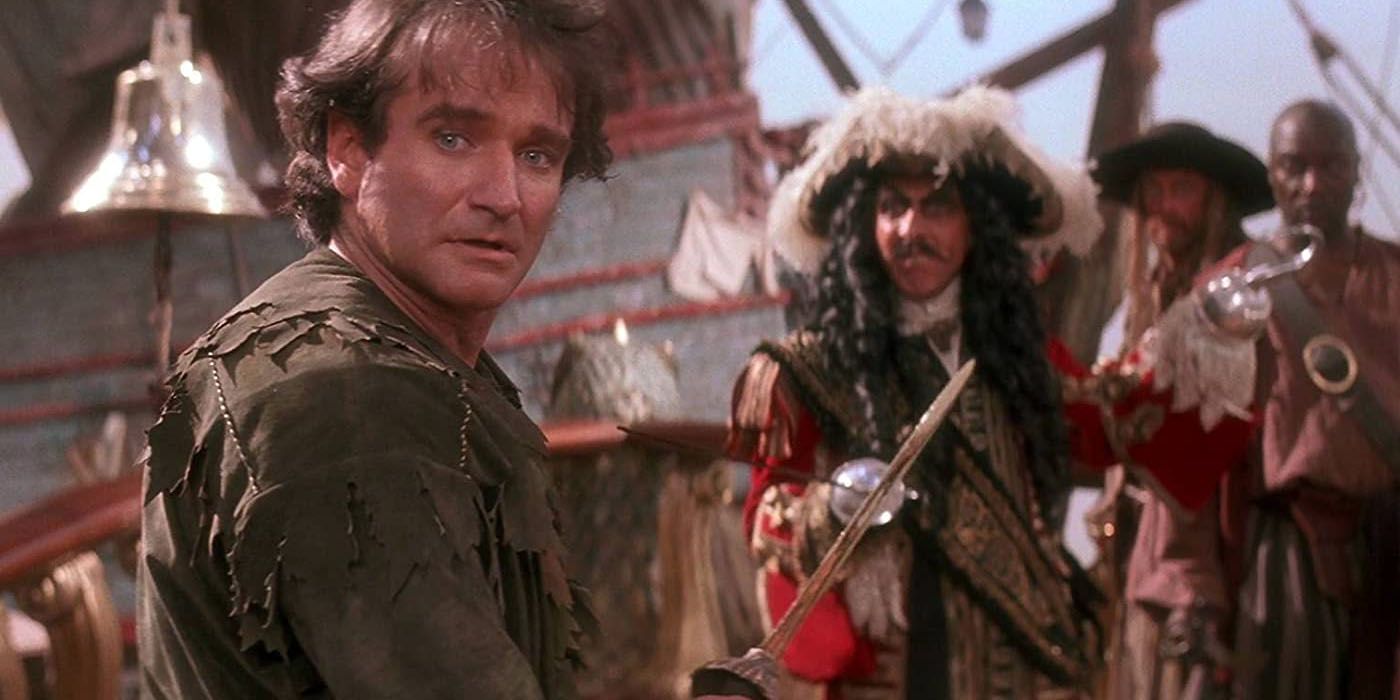
As mentioned, I really do like the idea of Peter Pan growing up. However, it’s execution was incredibly poor through the script. It was full of cringe-worthy, awful, and forgettable dialogue that never seemed to mean anything. And then there’s the acting, I can’t attribute all of this to the actors, because there are some greats in the movie, but it just doesn’t live up to what it should be. Robin Williams was one of the best comedic actors ever, but this movie wastes his character so that almost three quarters of the film is spent with Robin Williams playing a boring character in a desk job. This is the antithesis of the character Robin Williams is good at playing. Don’t get me wrong, Dustin Hoffman and Robin Williams have their moments, but it’s almost as if they are wasted in favor of having the awful child actors fill large portions of the story. This is the element I simply couldn’t stand. There were seriously some moments I laughed due to the poor dialogue/acting in some scenes. To put it simply, it seemed that Spielberg was forcing the message down our throats. While it tries to have that emotional message, it also attempts for comedy, which is very low brow throughout. This is reflected in everything throughout the film. While the production design is likely the most praised element of the movie, I thought it looked incredibly fake, and the colors weren’t what they should have been for the movie.

Hook: Why Steven Spielberg Doesn't Like It (But Audiences Do)

Overall, I’m not a huge fan of Hook. While it does get better towards the end, it’s largely just too bland to make me care for it in the slightest. 5.7/10

Barton Fink Review

Barton Fink | Golden Globes

Barton Fink is one of the most interesting Coen Brothers movies to date. Unlike many other movies, this one is slow, almost painfully slow. However, there is a meaning in that slowness. The extremely sluggish pacing allows for some brilliant dry dialogue. This not only helps the dramatic moments, but the comedic as well. Generally, I’d say that it balanced the two fairly well, even though I did find myself getting bored quite often. What the movie does, is it puts caricatures in a mundane world. It shows this distinction in multiple ways, the slow pace being one of those. This is also shown through its wide variety of shots, often having average shots with themes of excitement. For example, one of the ways the movie tells time is through the wall paper slowly peeling. Because the movie only truly takes place in two or three locations, having this in nearly every scene is a brilliant indication of time.

15 Fiery Facts About 'Barton Fink' | Mental Floss

Now, as I mentioned, the slow pace did get to me quite often, but there were other issues I had. For one, the main actor’s accent wasn’t at all consistent. It went between kind of British and deep Southern, almost always somewhere in between. Other than that, the acting was fine. Another small nitpick I’d note is how repetitive everything is. I’m usually ok with this, but when the movie nears being two hours, I end up having an issue with it. The exciting twist happens about 2/3 of the way into the movie. Honestly, while I appreciated the fact that the movie thrusted us into this world, I found that we didn’t need quite that long to get used to the life of the characters.

Barton Fink' sequel - Business Insider

All in all, Barton Fink is a fine watch. It makes some interesting artistic choices, and is somewhat hard to describe due to its slow pacing. It’s too slow to necessarily be a comedy, but not dark enough to be anything purely dramatic. Overall, I’d give it a 6.7/10

Design a site like this with WordPress.com
Get started