
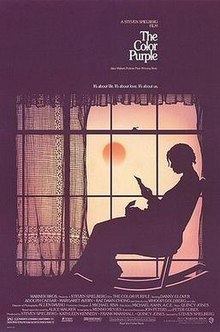
On a surface level The Color Purple is a very emotion-driven story that is all about becoming free. However, I found that, although it had those elements were there, it wasn’t for the right reasons. I’ll start with the good, because it is there. One thing The Color Purple does well is something Spielberg hasn’t done in any other films, and that’s using long and wide shots. While, I should say that this doesn’t make sense for his usual blockbuster, it was refreshing to see him try something new with his shots. Along with that, the colors in this film are perfect. It’s incredible that it’s as easy as it is to realize that a film takes place in the early 1900s South simply based on its color, The Color Purple is no exception. Overall, the performances are absolutely outstanding, namely, Whoopi Goldberg. Her performance is amazing, and it’s backed up by the likes of Oprah and Danny Glover. The way they handle the idea of abuse shows very well, and it does through everything the film does. Abuse is a very real and interesting topic to cover through film, but that being said, the movie takes it just a little too far. Even within the first 30 minutes, it felt like they were beating the dead horse, they’d shown the audience enough. It seemed to die down after that, but it still felt like it was trying too hard to convey the message at certain moments. But, for the most part, that hardly bothered me. I was bothered by a more sensitive topic. So, I will give a warning to say that I have not experienced what it is like to be a person of color, and that I am simply speaking from the experiences I have had, and the history I have learned. That being said, the movie doesn’t handle racism well. For a film based in the South in the early 1900s, it seems that racism is almost non-existent. There are brief moments that they touched on the idea, but truly, I only counted three. That isn’t to say that all films featuring people of color need to take on the ideas of racism, but, when a film is placed in a setting as prominent as this, it’s almost insulting not to. The way that it treated black life at the time as a happy kind of a thing seemed to gloss over the serious things that were happening at the time. This had a somewhat ripple effect for my view of the film. I wanted to like it, because this overall idea is intriguing, but I just couldn’t shake the idea that something was wrong with it. And I believe that there is one easy solution, it shouldn’t have been Spielberg. There is a phrase for writing that you should write from what you know, and I think it’s safe to say that directing isn’t all that different. Bringing in a black director would have likely made it so the story was more believable, and more importantly, made it so black voices were heard. Especially at the time, directors that weren’t white men were virtually unheard of, even now, that still somewhat holds true. That needs to change. Film is all about expression, and more voices are waiting to be heard. So, overall, the movie is fine, but it glossed over an incredibly important aspect of the time period, which made it hard to watch. 7.8/10
 Another Flipping Film Blog